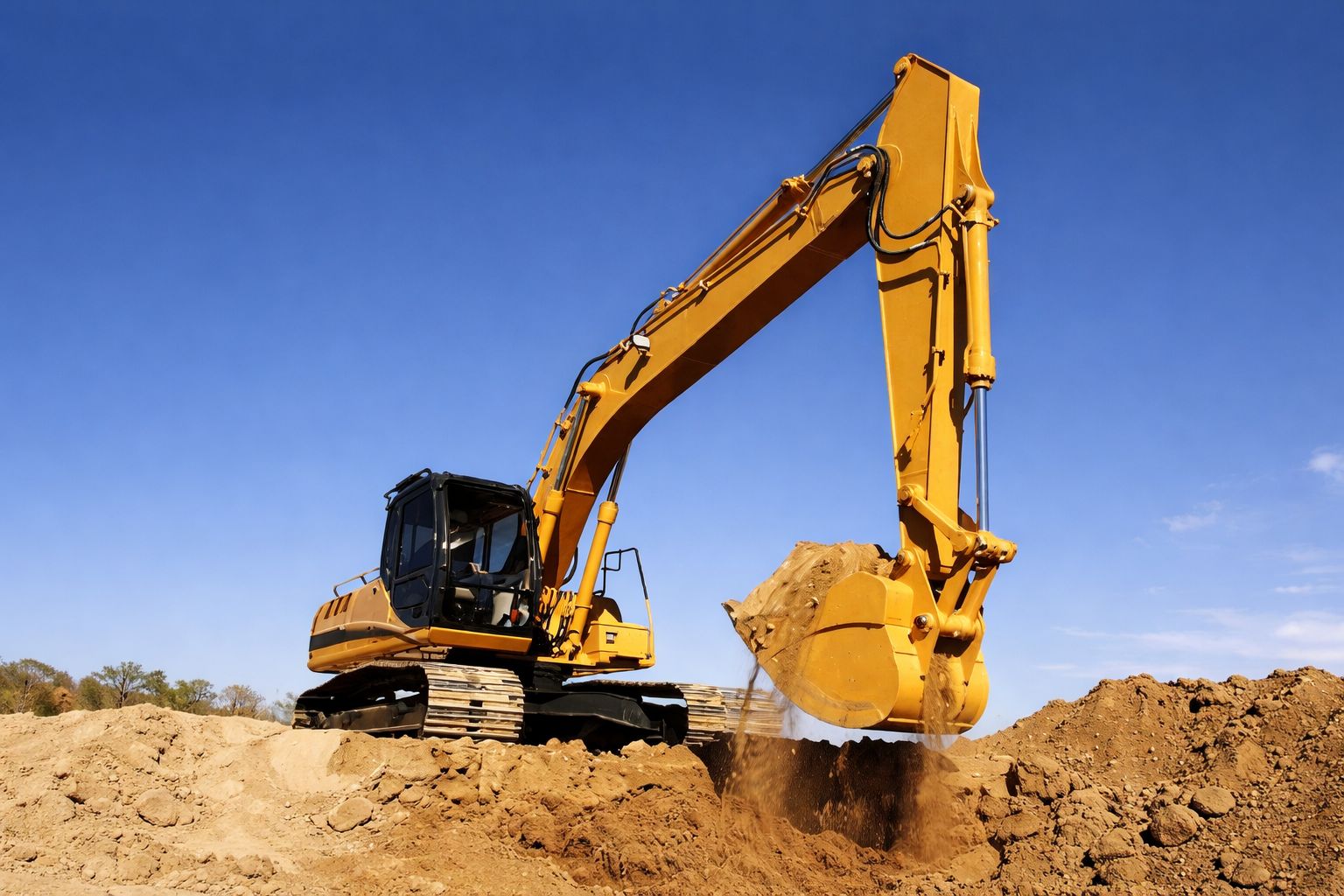
A dry pin can turn a good day into a noisy one fast. When you’re greasing in dust, mud, and tight access points, the wrong grease gun wastes your time, increases downtime and builds frustration.
This guide compares a Milwaukee grease gun to common alternatives, so you can pick the one that suits your machines and prevents downtime.
Why a grease gun choice matters on excavators
Excavators live and die by pins, bushes, and the operator’s ability to provide accurate control. Miss some grease points, or rush over them, and you invite wear that shows up as joint slop, squeaks, and expensive downtime.
A good grease gun with high-quality grease makes it easier to stay consistent. A frustrating one turns greasing into a job you put off until “later”, then later costs money.
Milwaukee grease gun basics (and what “milwaukee electric grease gun” usually means)
When operators search “milwaukee electric grease gun”, they are usually talking about a cordless, battery-powered grease gun built for field work. The appeal is simple: you can grease on the pad, on the bench, or on the job without dragging air lines around.
A Milwaukee grease gun typically sits in a wider battery ecosystem. If you already run Milwaukee batteries for other tools, swapping packs in the ute can be easier than carrying another charger and platform.
What to compare when choosing a grease gun for heavy equipment
Specs matter, but your site’s condition reality matters more. Use this checklist to compare a cordless grease gun, a battery grease gun from another brand, or a workshop pneumatic option.
1) Pressure and flow control
High grease gun pressure helps when fittings are stubborn, lines are long, or grease is cold. Flow control matters when you want to avoid blowing seals or purging grease everywhere. Greasing at the end of the day or midday helps the grease flow through the grease lines and around the pin cavity.
2) Coupler performance
A mediocre coupler turns greasing into a wrestling match. Look for secure engagement, easy release, and a design that reduces blow-offs under load, including a lock-on coupler option.
3) Hose whip, reach, and access
Excavator grease points hide behind guards, linkages, and boom geometry. A flexible hose, workable length, and a manageable head angle reduce the time you spend repositioning.
4) Priming and purge behaviour
Air locks waste cartridges and patience. A grease gun that primes easily after cartridge changes, and clears air without drama, saves time across a week. Using grease packaged correctly, without airlocks, in the cartridge also helps prevent priming problems.
5) Cartridge vs bulk loading
Cartridges are tidy and predictable, especially on site. Bulk grease can cut cost if you have a clean setup in the workshop, but it adds handling and cleanup. In the field, using grease cartridges provides measurable use and accurate control.
6) Cold weather and thick grease
If you run heavier grease or start early in winter, viscosity becomes a real factor. The best option is the one that keeps output consistent when the grease stiffens. TEXXON Easy Pump Grease provides the semi-synthetic benefits while maintaining increased flow in cold weather.
7) Serviceability and parts
Hoses, seals, and couplers are consumables in earthmoving. Choose a tool with easy-to-find replacement parts, and a design you can keep running.
8) Durability in dust and vibration
A grease gun rides in toolboxes, gets dropped, and lives around grit. Prioritise solid build, a stable stand-up design, and controls that work with gloves.
Milwaukee vs alternatives, side-by-side for contractors
Below is a field-focused comparison that reflects what operators notice after the first month. Use it to compare a Milwaukee grease gun with other common choices, including DeWalt, Makita, Lincoln, Alemite, and a pneumatic shop setup.
| Option | Best fit | Strengths on site | Trade-offs | Typical setup note |
|---|---|---|---|---|
| Milwaukee grease gun (cordless) | Owner-operators and small fleets that grease daily | Portable, fast routine greasing, strong battery ecosystem | Upfront cost, still depends on coupler quality | Pair with a quality coupler and spare hose |
| DeWalt cordless grease gun | Fleets already on DeWalt batteries | Battery compatibility, good field portability | Model features vary by version | Standardise batteries across crews |
| Makita cordless grease gun | Crews on the Makita platform | Platform fit, portable for service trucks | May be less common in some hire fleets | Check parts availability locally |
| Lincoln / Alemite (pro-focused) | High-use maintenance teams | Strong accessory support, workshop and fleet history | Heavier, can be more “trade counter” than big-box | Match to your couplers and fittings standards |
| Pneumatic shop grease gun | Workshop-heavy maintenance | Consistent output, no battery management | Needs air, less portable on site | Best as a bench tool, not a jobsite tool |
Keep your decision anchored to your work pattern. If you grease in the field every day, cordless convenience often wins, even when the workshop option looks cheaper on paper.
Best picks by real job scenarios
Use these scenarios to shortcut the decision. Each one points to a best fit based on time pressure, access, and how your maintenance actually happens.
Scenario 1: Single excavator owner-operator
If you’re greasing one or two machines, time is your currency. A Milwaukee grease gun or any reliable cordless grease gun is usually the simplest way to stay consistent, especially when you grease on site.
Best fit: Milwaukee grease gun if you already own Milwaukee batteries, otherwise a strong cordless alternative on your current platform. Keep the focus on coupler quality and easy priming.
Scenario 2: 3 to 10 machine fleet with multiple operators
Consistency across the crew matters more than the badge. Standardise on one battery platform where possible, then standardise couplers, spare hoses, and grease cartridges so everyone gets the same result.
Best fit: A platform-matched cordless grease gun with a written greasing routine. Add a workshop pneumatic gun for rebuild days and bulk grease if you’ve got clean processes.
Scenario 3: Remote civil jobs with service truck greasing
Remote work rewards tools that are easy to run out of a truck, and easy to keep running. You want spare parts, common cartridges, and a setup that primes fast when you’re covered in dust and the sun is dropping.
Best fit: Milwaukee grease gun or a widely supported alternative with local parts access. Avoid niche setups that force you to hunt fittings and seals.
Scenario 4: Wet, dusty quarry or demolition conditions
Dirt finds its way into everything. Prioritise durability, glove-friendly controls, and a coupler that locks on without repeated attempts.
Best fit: A rugged cordless grease gun with a proven coupler, plus spare hoses and seals in the truck. Treat the coupler as a wear item, not a forever part.
Scenario 5: Workshop-heavy maintenance with scheduled greasing
If most greasing happens in a yard with air and benches, a pneumatic grease gun can make sense. Keep a cordless unit as the backup for field callouts and quick fixes.
Best fit: Pneumatic in the workshop, cordless for the field. Your cordless choice can still be Milwaukee if that platform is already common.
Internal link example: Grease Couplers and Zerk Fittings: Types and Compatibility
Setup tips that prevent mess, blowouts, and wasted cartridges
A great grease gun can still perform badly with a poor setup. Use these steps to reduce blow-offs, stop wasting grease cartridges, and speed up your excavator maintenance routine.
Step 1: Upgrade the coupler
Start with the coupler, not the motor. A quality grease coupler that engages cleanly and releases without drama is often the biggest improvement you can make.
Step 2: Keep a spare hose and seals
Hoses kink, split, and get damaged in the toolbox. A spare hose and a small seal kit can turn a breakdown into a five-minute fix.
Step 3: Prime fast and clear air locks
After swapping a grease cartridge, prime immediately and purge air before you crawl under the machine. If the gun struggles to prime, check cartridge seating, plunger position, and coupler seal.
Step 4: Match the grease to the job
Pins, bushes, and bearings need the correct grease type for load, water exposure, and temperature. Using the wrong grease can create purge issues and shorten component life.
Internal link example: Grease Selection Guide for Pins and Bushes
Step 5: Keep fittings clean
Wipe the zerk fitting before attaching the coupler. This small habit reduces contamination and helps the coupler lock on first try.
What most buyers miss
The gun brand gets attention, but small parts drive the experience. Coupler quality, hose condition, and grease choice decide whether you finish the round cleanly, or wear a tube of grease.
Quick decision checklist, Milwaukee or an alternative?
Use this to decide in under a minute. Tick the statements that match your situation.
- You grease on site most days, not in a workshop.
- You want fast priming after a grease cartridge change.
- You already carry Milwaukee batteries, or your crew does.
- You need a cordless grease gun for tight access and quick rounds.
- You can buy hoses, seals, and couplers locally without delays.
- You’re willing to fit a quality coupler from day one.
- Your machines see dust, water, or vibration that punishes cheap gear.
- You want one standard setup across multiple operators.
If you ticked 5 or more, a Milwaukee grease gun or a platform-matched cordless alternative is likely the best fit. If you ticked fewer than 5 and most greasing is in a workshop, a pneumatic setup plus a basic cordless backup can be the smarter spend.
FAQ
Which is better for excavators, a cordless grease gun or a pneumatic one?
Cordless wins for field rounds and daily checks. Pneumatic wins in workshops with air and clean benches.
Does a Milwaukee grease gun work with any grease cartridge?
Most grease guns are designed around standard cartridge sizes, but always check the cartridge format you use and how you load it. The bigger issue is priming and keeping air out.
Why does my grease gun not pump grease sometimes?
Air locks, a poorly seated cartridge, a blocked zerk fitting, or a failing coupler seal are common causes. Start by purging air, then check the fitting and coupler.
What coupler should I use for heavy equipment greasing?
A quality lock-on coupler or a proven quick-release style reduces blow-offs and saves time. Pick one that matches your fittings and is easy to release under pressure.
How often should I grease excavator pins and bushes?
Follow the machine manual and your site conditions. High dust, water, and heavy duty cycles often mean more frequent greasing.
Conclusion
A Milwaukee grease gun is often a strong choice for excavator operators because it makes field greasing quick and repeatable. Many alternatives perform just as well when they match your battery platform, parts availability, and coupler setup.
Your best result comes from aligning tool choice with your routine, then locking in the basics: quality coupler, spare hose, correct grease, and consistent rounds. Choose your setup today, standardise your consumables this week, and protect your pins and bushes before wear shows up on the job.
Suggested internal links: Excavator Maintenance Checklist, Grease Selection Guide for Pins and Bushes, Grease Couplers and Zerk Fittings: Types and Compatibility
IMAGE 1, IMAGE 2, CHART 1, TABLE 1, IMAGE 3, IMAGE 4